
✨ Building Regulations
CORPORATION OF INVERCARGILL.
REGULATION No. 12.—NEW BUILDINGS.
A REGULATION of the Council of the Town of Invercargill, under part V. of the 13th Schedule of “The Municipal Corporation Act, 1867.”
In pursuance of the said Schedule of the said Act the Council of the Town of Invercargill make the following Regulation, that is to say:—
-
This Regulation shall come into force within the district, and at the times herein mentioned, that is to say, as to the portion of the town of Invercargill described in Schedule A to this Regulation, on the 1st January, 1874. And as to any other portion of the town which may from time to time be added thereto by resolution of the Council on such day as shall be appointed in that behalf by such resolution.
-
For the purpose of this Regulation the words “new buildings” shall be deemed to mean any buildings (whether to be erected in place of any buildings burnt down or damaged by fire, or not to be so erected) which at the time of this Regulation coming into force as to the portion of the town within which the same shall be situated, shall not have been commenced to be erected or of which at such time the foundation shall not be fixed on the site thereof, complete, to receive the external walls, or of which, at such time, such external walls, if of brick or stone, shall not be carried higher than the footings, or of which the materials intended for such external walls, if of timber, shall not at such time be prepared and delivered on the premises containing the site of such buildings, ready to be erected.
The words “external walls” shall include party walls. The word “chimney” shall mean and include chimney flue, smoke vent, and stove pipe.
-
It shall not be lawful to lay any foundation, or proceed in any manner in the erection of any new building until after the expiration of three (3) clear days’ notice in writing, signed by the person intending to erect such new building, shall have been delivered at the office of the Surveyor of the Council, stating such intention, and describing the site on which it is intended to lay such foundation, or erect such buildings.
-
The party walls (or main side walls, as the case may be), of every new building to be erected within the district aforesaid, shall be constructed of brick or stone, and shall be of the thickness hereinafter mentioned, that is to say, if constructed of brick, and to a height not exceeding 15 feet from the foundations thereof, and comprising one storey only, then of a thickness of not less than 9 inches ; if of brick, and to a height not exceeding 25 feet from the foundation, and comprising not more than two storeys, then of a thickness throughout, or throughout the lower story, if more than one, of not less than 13 inches and a half, and from the lower story upwards of not less than 9 inches ; and so on in proportion throughout the storey or storeys, as the case may be, for any greater height than 25 feet from the foundation. But if the wall should be constructed of stone, the above thickness to be read as fifteen inches in place of 9 inches, and 25 inches in place of 13 inches and a half. Provided that it shall not be necessary to erect two party walls in the case of two adjoining buildings erected at the same time, but that it shall be lawful to erect one common wall for both such buildings—but so that the ends of the bearing timber shall in no case approach nearer to each other or to the opposite side of the wall than four inches and a half.
-
Every party wall shall be carried up to a height of not less than two feet above the gutter, or not less than one foot above the roof, and shall be surmounted at the top thereof with a coping.
-
The foundation of every new building shall rest on the solid ground, or on concrete, asphalte, stone piles, or other solid and incombustible material.
-
The flat gutter and roof of every new building, and every turret, dormer, lantern light, skylight, or other erection placed on the flat or roof thereof, shall be externally covered with slates, tiles, metal, or other incombustible material.
-
The chimneys, furnaces, and fireplaces of every new building shall be constructed of brick or stone, and the chimneys shall be carried up to such height as the Surveyor of the Council shall certify in writing to be sufficient to protect adjoining or neighbouring building from any danger from fire arising therefrom.
-
No part of any external or internal wall or partition not constructed as a party wall, shall be nearer to any stove, grate, or other apparatus for containing fire, than at a distance of two feet therefrom, nor to any stove pipe, or flue passing through such wall or partition than at a distance of 18 inches therefrom; and any wall or partition which in the opinion of the Surveyor of the Council shall require protection from fire in consequence of such apparatus, stove pipe, or flue, shall be protected in such manner to such extent and with such material as he shall in writing require.
-
The external walls of every new building erected for the purpose of containing or containing any fireplace or furnace to be used in the working of any engine by steam (although such engine may not be used therein), or in any mill, brewery, bakehouse, or gas works, or in any manufactory whatsoever, shall be constructed of brick or stone, of the thickness specified in clause 4 of this Regulation, and the roof covered in with iron or other incombustible material.
-
For the purpose of this Regulation, doors door frames, windows, window frames, shop fronts, and mouldings and projection of walls shall not be deemed to be parts of the external walls, or of the flat gutter or roof thereof.
-
Any person using or building, or keeping for use any furnace, and receiving from any other person notice of any building being or being about to be erected within 20 feet of such furnace, shall forthwith erect a party wall of brick or stone between such furnace and the site of such intended building.
-
The party wall to be erected in pursuance of clause 12 shall be of such length and height respectively as the Surveyor of the Council shall certify (in writing) to be sufficient to protect the buildings from any danger by fire arising from the furnace.
-
For the purposes of this Regulation every roof and every new building within the said district shall be subject to the inspection, superintendence, and services of the Surveyor of the Council; and there shall be charged and received beforehand by such Surveyor on account of the town fund in respect of such inspection, superintendence, or other services such fees as are set forth in Schedule B to this Regulation, or as shall from time to time be appointed by the Council by resolution in that behalf in lieu thereof, or in addition thereto.
-
The Surveyor of the Council may at any time give notice (in writing) to any person building, or about to build, or causing to be built any building, situate within the said district, that such building, or part thereof as may be specified in such notice, is, or will be contrary to this Regulation; or by reason of the construction, workmanship, or material thereof of dangerous to life or property.
-
No person shall renew any roof of any building situate within the said district otherwise than in accordance with this Regulation.
Next Page →
 Otago Provincial Gazette 1874, No 884
✨ LLM interpretation of page content
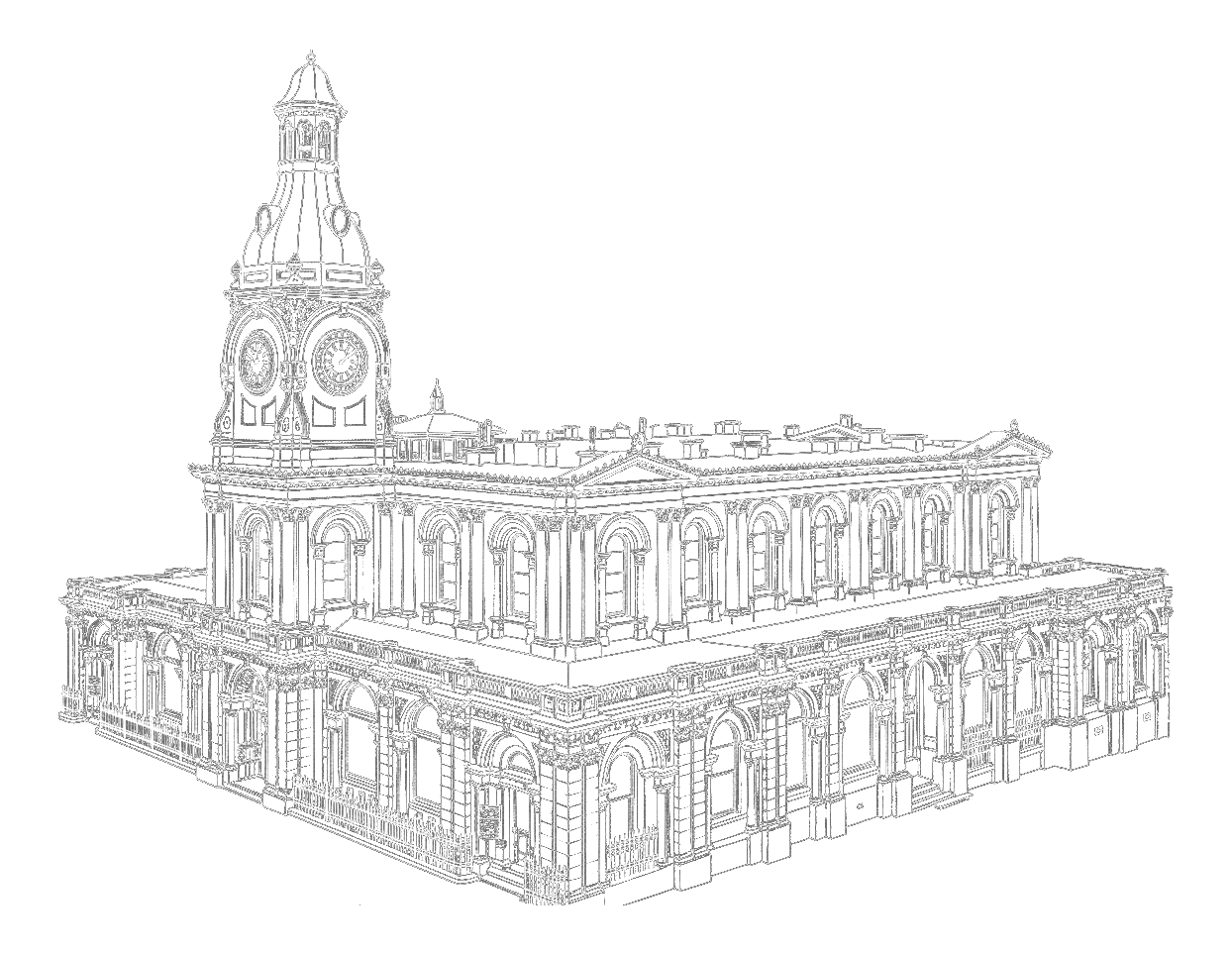
🏗️ New Buildings Regulation for Invercargill
🏗️ Infrastructure & Public WorksBuilding regulations, Construction standards, Fire safety, Invercargill