
✨ Patents and Inventions
1204
THE NEW ZEALAND GAZETTE.
[No. 31
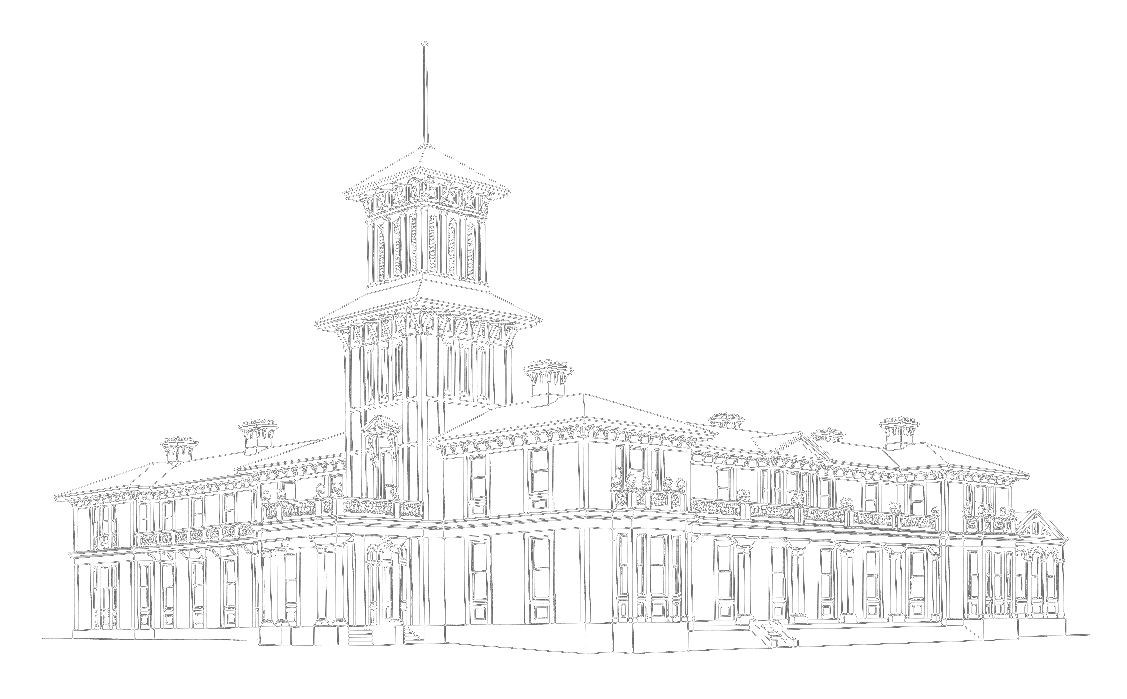
the direct observation of the nurse from the central duty-room, substantially as described and illustrated. (2.) In a hospital building of the kind set forth in claim 1, I claim the cross and ventilators of each cubicle, which is effected on the one hand by a window, door, and ventilators in the outer wall of the building, and on the other by one or more air-ducts from the cubicle passing under the floor of the opposite and adjoining cubicle to the outside air, and by a foul-air extractor communicating with the open air by a separate air-shaft through the roof, substantially as described and illustrated. (3.) In a hospital building of the kind set forth in claim 1, the provision of a glazed-roofed verandah on all sides having a door for each cubicle opening on to it, and the admission into the cubicle of fresh air from above the verandah-roof by means of fanlights, substantially as described and illustrated. (4.) In a hospital building of the kind set forth in claim 1, the provision of lavatory or wash-hand basins adjacent to the doors of the cubicles, substantially as described and illustrated. (5.) Hospital buildings constructed and arranged substantially as described and illustrated.
(Specification, 6s. 3d. ; drawing, 2s.)
No. 23788.—4th December, 1907.—CHARLES CYRUS BULLOCK, of No. 86 Lane Cove Road, North Sydney, New South Wales, Australia, Licensed Surveyor. Improved automatically closing one-way gate specially applicable as an entrance for trapping-enclosures.
Claims.—(1.) An improved gate for the purposes set forth, consisting essentially of a series of independently operating forwardly inclined pointed rods or bars loosely upon a common axle adapted to have free movement one way and to return to normal position, and suitable folding framing, substantially as described and explained. (2.) In gates of the class set forth, the combination with an axle supported by two ends and having loosely thereon a series of pointed rods or bars, of a top plate or bar adapted to determine the extent of rearward movement of the points of said rods or bars, substantially as described and explained. (3.) In gates of the class set forth, the combination with an axle supported by two ends and having loosely thereon a series of pointed rods or bars, of a top bar pivoted upon said axle, having spring lugs thereon, for the purposes set forth, substantially as described and explained. (4.) In gates of the class set forth, the combination with an inclined rod or bar to be threaded upon an axle, of a pivot piece of the construction explained, substantially as described, and as illustrated in Fig. 3 of the drawings. (5.) The combination and arrangement together of the mechanical parts or integers for the purposes set forth, comprising an improved automatically closing one-way gate, substantially as described and explained, and as illustrated in the drawings.
(Specification, 4s. ; drawing, 1s.)
No. 23874.—31st December, 1907.—AIDEN DEVEREUX WILSON, of Kuils River, Stellenbosch, Cape Colony, Gentleman. A new and improved method of separating, under water-pressure, precious stones, minerals, metals, and other substances from lighter materials or soils.
Claims.—(1.) The contrivance specifically described above for use in connection with the concentration or separation of precious stones, gems, precious minerals, and base or other metals and substances generally. (2.) The adoption by means of the contrivances described of an upward current of water flowing through the pipe C meeting the downward current of material to be treated coming through the space F to separate the light from the heavy particles. (3.) The vessel A which owing to its double conical shape (first) automatically spreads the material into the annular space F, where (second) it meets the water where the annular area is largest, and where the particles before reaching the point of separation at bottom of pipe G become cleaned from any adhering smaller particles and get thoroughly wetted, (third) the inverted portion of vessel A then makes the distribution of the material at bottom of pipe G regular and even, and thereby insures the thorough separation of the light from the heavy particles. (4.) The receptacle B for the minerals won being secure from interference and capable of being closed in and kept under lock and key. (5.) The contrivance whereby the distance between such point of delivery and the point of overflow may be varied according to the grade of the material under treatment. (6.) The combination of the two
taps K and L, the one to turn on or off the water-supply, and the other to control and fix the supply of water requisite for the pressure needed according to the grade of ore or material under treatment.
(Specification, 6s. ; drawing, 1s.)
No. 23964.—31st January, 1908.—ARCHIBALD SLINGER, of No. 12 Fifield Street, Littlebourne, Civil Engineer, and ROBERT KNOX, of 32 St. David Street, both in Dunedin, New Zealand, Plumber. An improved level fresh-air inlet for house or other drainage.*
Claims.—(1.) In fresh-air inlets used in the ventilation of drainage-systems, and in combination with these systems, an inverted box divided into two compartments, the outer one formed to keep dirt or rain from entering the inner but to admit a current of air to the system, and the inner compartment furnished with an inspection-cover and containing the inlet-branch, all substantially as shown in the drawing, and as described and as explained. (2.) In fresh-air inlets or level inlets, the inlet laid in the footpath and covered with an inverted box of two compartments, the outer one arranged to exclude dirt or rain, and furnished with holes from above, all admitting air to the inlet, combined with an inspection-cover, the whole forming a fresh-air inlet to a ventilated drainage-system, all substantially as set forth.
(Specification, 2s. 6d. ; drawing, 1s.)
No. 24020.—19th February, 1908.—WILLIAM HOOKER, of 14 Mowbray Street, Albert Park, South Melbourne, Victoria, Australia, Gas-engineer. An improved primary electrical battery.
Claim.—A primary electrical battery comprised of cells each consisting of a tinned-iron trough A containing the composite mass of iron-borings and cupric-black oxide of copper combined in the proportions as set forth, in combination with the horizontally supported zinc plate F immersed in an exciting solution of caustic potash, as and for the purpose described.
(Specification, 2s. 6d. ; drawing, 1s.)
No. 24024.—18th February, 1908.—BRITISH AUTOMATIC AERATORS, LIMITED, of 22 to 26 Paul Street, Finsbury, London, England, Manufacturers (the assignees of Hubert Pearce, of Stanstead Abbots, near Ware, Hertford, England, Engineer). Improvements in or relating to self-contained aerating-machines.
Extract from Specification.—According to this invention, a pair of snift-valves and two other valves, one for the aerating gas and the other for the aerated liquid, are grouped together so that the snift-valves lie on one side of a given plane approximately parallel to the axes of the valves, whilst the other valves are similarly disposed on the opposite side of such plane ; when so arranged they may be operated by a single shaft situated in the plane of the dividing-line. This shaft preferably takes the form of a rocking tappet-member, and carries a single operating-handle whereby movement in one direction causes two of the valves to be operated, and movement in the reverse direction effects the operation of the other two valves and releases the first two. The four valves grouped together as described are carried in a cover-plate or head comprising a shell of hard metal and a filling of block tin—i.e., solid tin as distinct from a coating of tin such as might be obtained by electroplating or dipping, and the term “ block tin ” is used in this sense throughout the specification. Chambers are formed in the block-tin filling to receive the valves, and the valves themselves are formed of block tin, whilst passages within the tin filling communicate between the valves and the various chambers or conduits of the aerator. Detachably secured to the shell of the cover-plate is a horizontal extension, also of hard metal, and depending from this extension is the delivery-vessel. The valves are disposed vertically, and the operating-shaft is mounted horizontally within the extension referred to. The free end of the operating-shaft projects beyond the extension and carries the operating-handle. In one form of machine, instead of a single operating-shaft being used, two separate levers are employed, each carrying two tappets, whereby each valve may be separately operated. With this construction, however, it is preferred to employ a device whereby one lever is caused to move with the other in one
Next Page →
 NZ Gazette 1908, No 31
✨ LLM interpretation of page content
🏥 Hospital Building Improvements
🏥 Health & Social Welfare6 December 1906
Hospitals, Building design, Cubicles, Nurses, Patients, Patent
🏭 Improved Automatically Closing One-Way Gate
🏭 Trade, Customs & Industry4 December 1907
Gates, Trapping enclosures, Inventions, Patents
- Charles Cyrus Bullock, Inventor of one-way gate
🌾 Method of Separating Precious Stones and Minerals
🌾 Primary Industries & Resources31 December 1907
Precious stones, Minerals, Metals, Separation, Water-pressure, Inventions, Patents
- Aiden Devereux Wilson, Inventor of separation method
🏗️ Improved Level Fresh-Air Inlet for Drainage
🏗️ Infrastructure & Public Works31 January 1908
Drainage, Ventilation, Fresh-air inlet, Inventions, Patents, Dunedin
- Archibald Slinger, Inventor of fresh-air inlet
- Robert Knox, Inventor of fresh-air inlet
🏭 Improved Primary Electrical Battery
🏭 Trade, Customs & Industry19 February 1908
Electrical battery, Inventions, Patents, Melbourne
- William Hooker, Inventor of electrical battery
🏭 Improvements in Self-Contained Aerating-Machines
🏭 Trade, Customs & Industry18 February 1908
Aerating machines, Inventions, Patents, London
- Hubert Pearce, Inventor of aerating-machine
- BRITISH AUTOMATIC AERATORS, LIMITED, Manufacturers (the assignees of Hubert Pearce, of Stanstead Abbots, near Ware, Hertford, England, Engineer)