
✨ Hydrographic Survey Report
206
that its reported existence must have arisen from
some voyager seeing Lord Howe island when his
longitude was out a degree, and his relative posi-
tion with the supposed new island not very skil-
fully determined. It will be seen that the dif-
ference in latitude is no more than a loose bearing
and distance might impart. I could only account
in this way for the two islands I in vain searched
for last year, almost in sight of Sunday island, as
laid down in the same chart, but which I
submitted in my report of last cruize dated
24th February, 1855. might be expunged.
4. The passage to Norfolk island occupied eight
days, light baffling winds kept us four days
from Port Jackson was rendered as fruitful as pos-
sible in regard to noting the current demarcation
signs of the trade and variables on this route at
this season of the year, together with such birds and
fishes as present themselves; and by frequent casts
of the lead to 200 fathoms, with a vigilant mast-
head lookout, satisfying ourselves that the way is
clear of islands, or even growing-up dangers, over
an ample radius upon every mile of the ship's
track, and which our track-charts will display,
the extent of night vision being distinguished from
that of day.
5. Bearing in mind the interest to science, and
your particular notice of the deep-sea soundings I
obtained last year between Lord Howe island and
New Zealand, bringing up the bottom in 755
fathoms, I seized an interval to lower boats at
sea for such operations, and obtained an up and
down cast, but without striking soundings in
1,112 fathoms, at which depth the temperature
proved to be 40° of Fahrenheit, while the
surface water stood at a temperature of 68°.
This cast was taken when Norfolk island bore N.
40° E., distance 54'. Again, the next day
(June 3rd), I tried for bottom in 500 fathoms,
when the island was only twenty-two miles dis-
tant on the bearing of N. 71° E., but did not
ground the lead. The temperature at 500 fathoms
was found to be 44°, while that of the surface and
the air showed 48°. These submarine tempera-
tures corroborated those obtained and transmitted
in 1852-3 and 4, in very distant positions, and
when the temperature of air and surface water
differed ten and eleven degrees from that at the
present test, the minimum temperature is 40°,
whether the depth be 1,500, 1,200, 1,000, 900, or
800 fathoms. At less than the latter depth, the
submarine temperature gradually rises, being
only 11° and 10° lower than the surface in 300
and 200 fathoms, until at 30 fathoms it is the same,
observing that all our tests have been between the
parallels of 30° north, 42° south. By these
deep sea casts in proximity with Norfolk island,
it appears that its base or bank of soundings rises
much more abruptly than that of New Zealand
I should not have been content with my 1,112
fathoms, but that the opportunity was brief, the
wind springing up and the swell embarrassing the
boats.
6. It had been published in the Sydney papers,
as resulting from a cruize of the Torch, that the
longitude of Norfolk island was in error in some
charts 68'; and on my consulting the published
books and charts during my passage thither, I
found discrepancies which made me unusually
anxious to clear up the point, otherwise it was my
intention to have passed well southward of the
island to avoid the skirt of the southeasters, and
so direct for the Rosaretta reef, and then take the
start for Fiji, experience having taught me that
this detour from Sydney to the Friendly islands
makes the best passage.
7. Having effected a landing on Norfolk island
on the 6th instant, a precarious process, but in
our case without accident to any person or the
instruments, a very satisfactory set of observations
including circum-meridians for latitude, where
obtained. Looking, however, to the passage before
me, and to dispel even a shadow of uncertainty
regarding clinching the position of this island, I
determined to test my rates by a sea day interval,
which, being obtained yields:
h m s
Meridian dist. from Lord Howe
island, forward rates
0 35 28-02 E
" " by back rates
0 35 28.09 E
Mean 0 35 28.55 E
Longitude in time, Lord Howe
island
10 36 23-09 E
" " Norfolk island 11 11 52-45 E
I am therefore enabled to inform you, that the
geographic position of Norfolk island may be re-
corded as having its landing rock on the settle-
ment on the south-west side in
Latitude
29 3 45 S
Longitude
167 58 6 E
Magnetic variation (in June 1855) 12 34 E
while Mount Pitt, the highest point of the island
towards its north-west end, as deduced trigonome-
trically, is in—
Latitude
29 0 56 S
Longitude
167 57 0 E
elevated above the sea, 1,039 feet, and visible 36
miles.
The desirableness of such record will be obvious
on reference to the following published positions—
Lat. S., Long. E.
Raper's Maritime positions, 1849 28 58 167 46
Findlay's List
29 2 167 48
Admiralty Chart, Captain Bradly,
1823
29 5 168 2
Laurie's chart, 1848
29 0 169 3
8. The very boisterous weather in this region
at this, its winter season, occasioning the shifting
of the ship from one side of the island to the
other for shelter, has obstructed the surveying
operations I designed; nevertheless by the assi-
duity of Lieutenant Hutchison and Mr. Smith,
as well as Messrs. Howard and Wilds, I shall be
enabled to improve Bradley's chart, in regard to
anchorage soundings, the edge of soundings, and
its direction of meridian.*
9. I may remark, in conclusion, that I found
the island no longer a penal settlement. The con-
vict establishment was withdrawn on the 7th of
May; and it is at present occupied by an assistant
commissary storekeeper, with a few hands engaged
in rendering into tallow the surplus sheep intended
for the Pitcairn Islanders, who are daily expected
to occupy the island, and whose hearts and minds,
simple though they be, will not fail to adore the
Queen and country which puts them in possession
with fostering solicitude, of the most lovely island
conceivable, with all the facilities for industry
and comfort; comprising fifteen square miles of
land capable of tillage, 800 acres cleared and
fenced, beautiful roads intersecting it, eighty-one
substantial buildings, including chapel, school-
room, hospital, barracks, dwelling houses, cottages,
mills, and workshops, together with household
furniture, artizans' tools, and agricultural imple-
ments, the gardens stocked with seed, and the
farms with 2,000 sheep, 300 cattle, horses, pigs,
and poultry. A bounteous bestowal indeed. Mr.
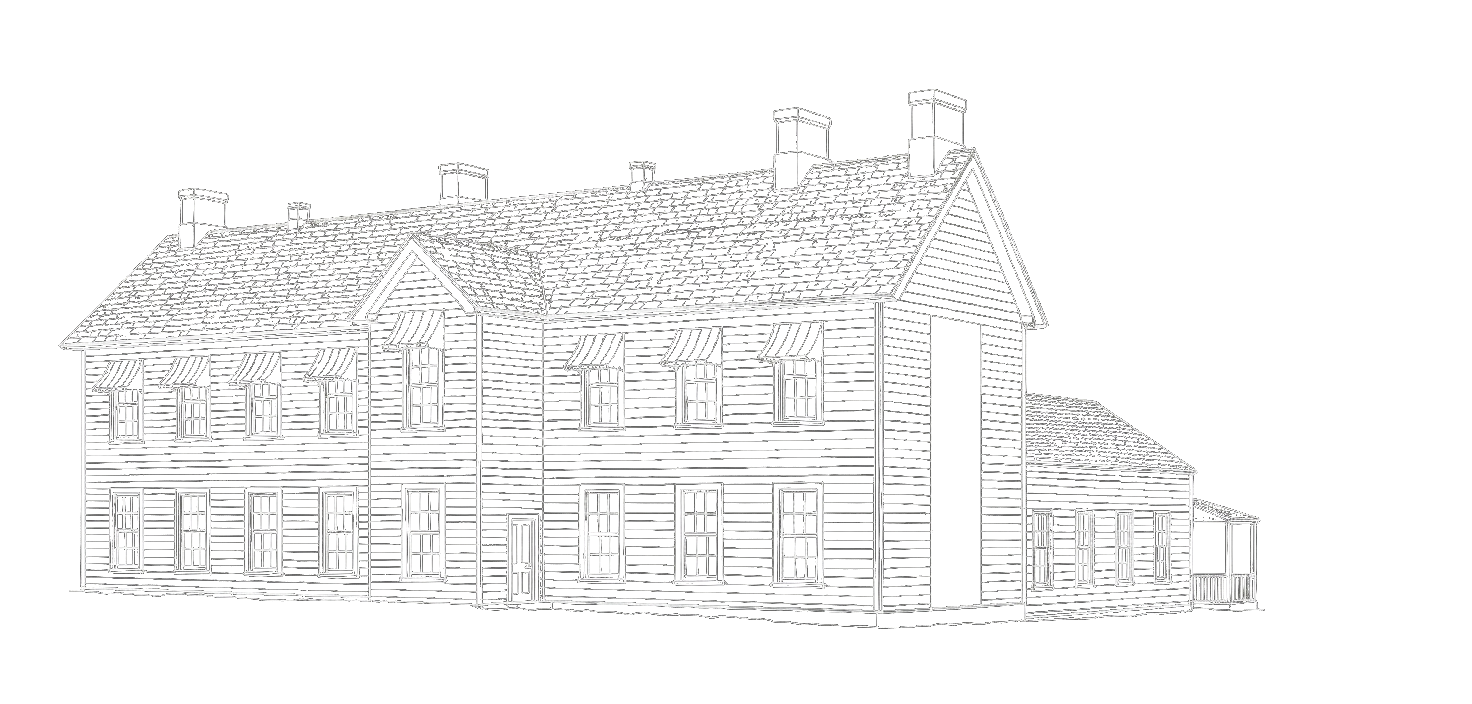
Wilson's drawings will convey a better idea of the
settlement than can my pen.
H. M. DENHAM.
The new plan of Norfolk island is in the
engraver's hands and will be published about the
1st April, 1856.-ED.
Next Page →
 NZ Gazette 1856, No 31
✨ LLM interpretation of page content
🏛️
Hydrographic Notice No. 2: Islands and Reefs in the South-Western Pacific Ocean
(continued from previous page)
🏛️ Governance & Central Administration12 June 1855
H.M.S. Herald, Lord Howe island, Fiji survey, Rosa-retta reef, longitude verification, navigation
- H. M. Denham
- Lieutenant Hutchison
- Mr. Smith
- Mr. Howard
- Mr. Wilds
- Mr. Wilson
- ED.