
✨ Government and Maritime Notices
201
trates—as upon any other of her Majesty’s subjects. The Magistrates are of course responsible for the occasion being one in which assistance and especially armed assistance, has become necessary, and we think it will be proper to issue instructions to the Magistrates to be very cautious not to resort to this species of aid, except when it has become absolutely necessary, but leaving this discretion entirely to the Magistrates. The Commanders of Her Majesty’s Ships ought to be instructed to be ready to act in aid of the civil power, whenever they may be called upon to do so.
We have, &c.
(Signed) FRED. THESIGER,
FITZROY KELLY.
Notice to Mariners.
Civil Secretary’s Office,
Wellington,
24th December, 1852.
HIS EXCELLENCY the Governor-in-Chief has been pleased to direct the re-publication of the following Notice for general information.
By His Excellency’s command,
ALFRED DOMETT,
Civil Secretary.
GOVERNMENT NOTICE.
Colonial Office, Cape of Good Hope,
24th August, 1852.
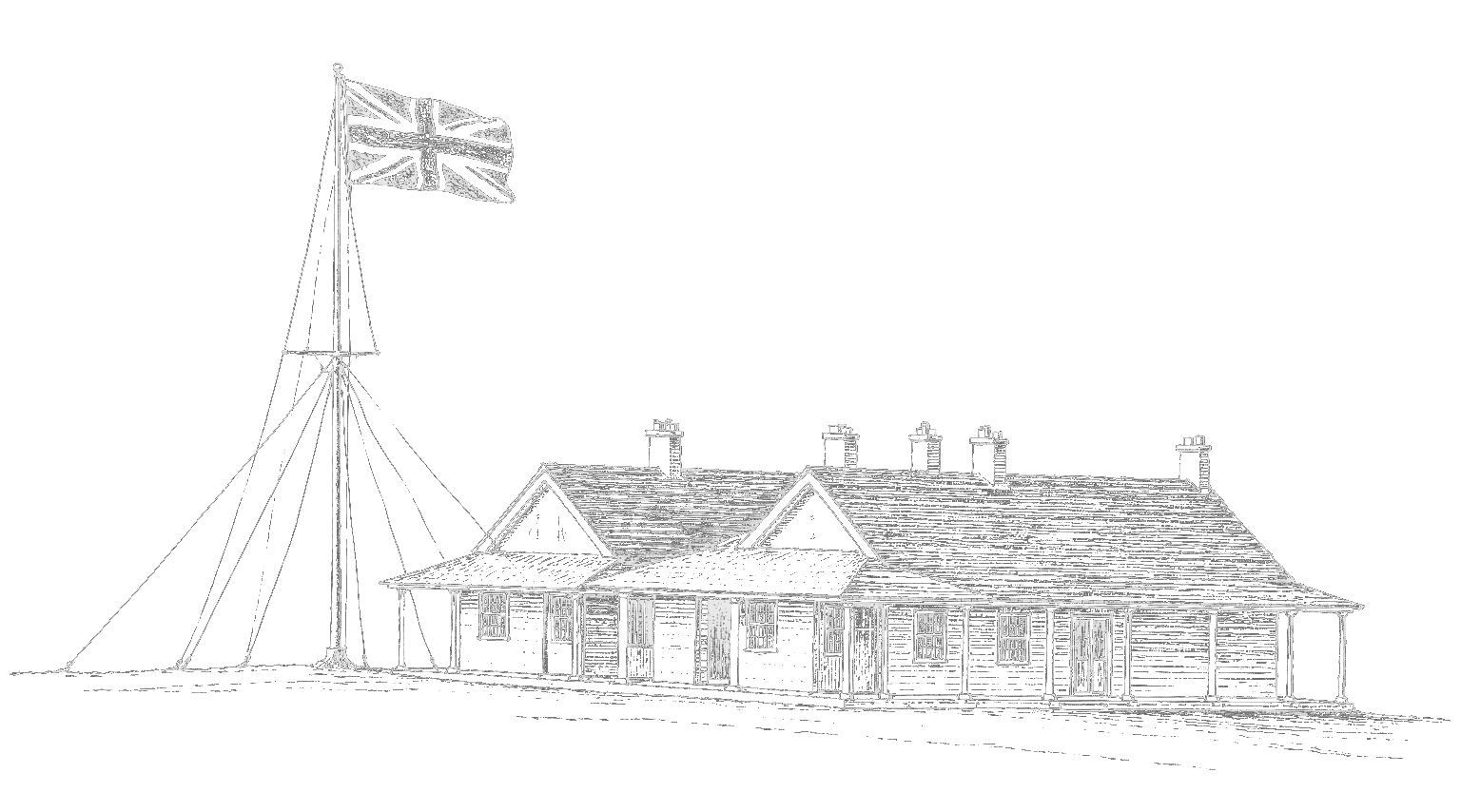
HIS Honor the Lieut.-Governor has directed it to be notified, that a Wooden Light House is about to be erected on the Eastern extreme of the Bird Islands, in Algoa Bay, and that this Light House will, from and after the 1st December next, show Two White Lights, 18 feet apart, and will be lit at sunset every evening, and continue until sunrise on each following morning.
By His Honor’s command,
(Signed) R. SOUTHEY,
Acting Secretary to Government.
SAILING DIRECTIONS FOR BIRD ISLANDS LIGHT.
Light House.—To show two lights 18 feet apart, one 10 feet higher than the other, latitude 33° 52' S.; longitude, East of Greenwich, 26° 12' 50" E.
Heights above mean water level.
The Foundation ………… 25 feet.
To the Eaves …………… 55 do.
The centre of Tower …… 60 do.
The centre of Upper Light … 70 do.
The Plan.—4 sided, each side at base 22.6.
Each side at eaves …… 16.0.
Painting.—The roof black, body of building white and black, horizontal stripes.
Lights.—The two lights will be laid on the line between them and the Doddington Rook, on which line one will be directly above the other, with a dark space between.
Vide—Extracts from Captain BOURNE’S Sailing Directions, for Cape of Good Hope, page 55.
"Bird Islands.—The Bird Islands, situated in the eastern extremity of Algoa Bay, lie off Woody Cape, which is, as its name imports, covered with wood, except a small patch of sand at its summit, and is the only sea-board land that is so, which gives it, in contrast with that for miles on either side, a dark appearance; the land on its west side, from near St. Croix up, rises into small numerous sandy hillocks, quite bare of vegetation, and that in the eastward, up to Padrone Point, is similarly bare.
Woody Cape.—Is high, rugged, and not prominent, scarcely determinable as a Cape, except when very near it; not so Padrone Point, which runs out into a low point of sand, forming a determinable Cape, without vegetation, from which breakers run out some distance, and the water breaks still further out at times, owing to the meeting of currents there, and after strong winds.
Anchorage off, and Dangers near, Bird Islands.—The innermost danger from these Islands is fully five miles from Woody Cape, and they afford tolerable shelter behind them in winds from W. to S.E., in 13 fathoms, and rather better than half a mile from the northernmost breakers; closer would afford more shelter, but the ground is foul. They are very low and apparently dangerous, and though the main land will generally be seen before them, and the distance from them may be estimated by it, yet this is not entirely to be relied on; so, in shaping a course to go outside of them, allowance should be made for the fact, that the eddy, or return current sets in towards them, and then to the eastward.
Doddington.—The Doddington and Western reef should be considered as part of the Bird Island reef, and no vessel should go between them; the water does not always break on them, but in bad weather the breakers extend the whole way from them to the Islands; the Doddington lies about 11 miles from Woody Cape. In clear weather the rugged topped mountain and the Cockcomb may be seen from these Islands, or rather from abreast of them, for the latter would be shut in when on them; but in passing outside the Doddington it should be kept open to the West of the rugged topped mountain, bearing about N.W., and the ship should steer N.W. by W. ½ W.; having passed the Doddington, the high land at the back of Port Elizabeth will soon appear right-a-head.
Erroneous Statements.—There are many statements current about breakers being seen from time to time in different parts of Algoa Bay; but, I believe, others than those laid down in the Chart, now transmitted, not to have any existence, and that that which has been mistaken for such, has been the effect of mirage."
GEORGE PILKINGTON,
Colonial Civil Engineer.
Next Page →
 New Munster Gazette 1852, No 32
✨ LLM interpretation of page content
🏛️
Letter from Law Officers on Desertion
(continued from previous page)
🏛️ Governance & Central AdministrationLaw Officers, Letter, Desertion, Merchant Vessels, Australian Ports, Naval Assistance
- FRED. THESIGER
- FITZROY KELLY
⚖️ Notice to Mariners
⚖️ Justice & Law Enforcement24 December 1852
Notice to Mariners, General Information
- ALFRED DOMETT, Civil Secretary
🏗️ Government Notice on Bird Islands Lighthouse
🏗️ Infrastructure & Public Works24 August 1852
Lighthouse, Bird Islands, Algoa Bay, Sailing Directions
- R. SOUTHEY, Acting Secretary to Government
🚂 Sailing Directions for Bird Islands Light
🚂 Transport & CommunicationsSailing Directions, Bird Islands, Algoa Bay, Doddington Rook, Woody Cape, Padrone Point
- Captain BOURNE, Sailing Directions for Cape of Good Hope
- GEORGE PILKINGTON, Colonial Civil Engineer