
✨ Military Roads Report and Medical Hospital Report
31
Parties.
They have been chiefly furnished by the Ngatiawa, Ngatiraukawa, and Ngatitoa tribes.
The former are preferred for industry and tractability.
The parties have consisted of minor chiefs, freemen, and slaves. The influence of the former appears to have declined,—it was never exercised for good, but frequently to produce dissatisfaction, and cause a strike, in which they formerly succeeded, but latterly have always been unsuccessful. They are now treated in all respects like the other workmen, and are equally under control.
The number of freemen has exceeded that of the slaves, which latter class appear to belong to individuals, not to tribes; in most cases there appears no difference between the clothing, food and manner of living of the slave and his master: I have even heard of their being joint owners of property, but however slightly the authority of the master may be exercised it appears to be indisputable, nor has there been an instance of appeal against it to that of the Superintendent of the party, even when deprived of their money and clothing, as is sometimes the case by masters who do not themselves work on the road, but visit their slaves occasionally to deprive them of the fruits of their industry, nor am I able to prevent this otherwise than by the discharge of the slave, which would probably be neither kindness to him nor punishment to his master.
I believe the effect of our making no distinction beyond that of the good or bad workman, is to gradually do away with those classes amongst the natives whom we employ.
They rapidly improve as workmen, and it is extraordinary that men whose previous lives have been passed in uncontrolled idleness should now work for months together so incessantly as to rest but one hour out of ten, and under such restriction as not to be allowed to smoke or even to talk to the interruption of their work; yet this result has been obtained by means so slight as to appear quite insufficient. An idle workman is occasionally fined sixpence or, if so talkative as to interrupt work, he is placed alone without listeners; if he has given satisfaction he perhaps receives his weekly wages in crowns, or if otherwise in sixpences. If a troublesome character, he is discharged; and though the Superintendents of parties have been detached many miles from any Europeans beside their overseers, in the wildest and most inaccessible places, there has never been an instance of violence towards them or the overseers. The greatest crime has been that of stealing an axe by a discharged native when another of the tribe after working all day travelled all night to recover it, and returned with it in time for work the next morning.
The means by which this control is maintained, are the exercise of strict justice in keeping our engagements with them, and firmness in insisting on their doing the same by us. I have been fortunate in having the assistance of gentlemen as Superintendents of parties who have carried out my views most fully, and without whom the effect which has been produced upon the character of the labourers could not have been obtained. They assure me that the bearing of those natives where they have known them up the coast, was so different to that which they now exhibit with the parties, as to make them appear a different race.
In disposition they appear cheerful, not quarrelsome amongst themselves nor vindictive. So singularly free from the vice of drunkenness as to enable me to repeat the assurance which I gave Your Excellency some months since, that not a case has ever yet come under the observation of either myself or the Superintendents of parties.
Those who profess Christianity, as is the case with the majority, are strict in their religious observances, nothing being allowed to interfere with their morning and evening worship; those who do not, however, are not to be unfavourably distinguished from those who do.
They do not now object to the mixture of tribes in working parties, though at first they were much opposed to it.
Their capacity as workmen is best shown by the works which they have executed, the only European labour which has been used in the construction of the bridges, &c., on the greater part of the line, being that of the Foremen who instructed them.
From such material and without additional expense beyond clothing and arms, I conceive an Artificer Corps might be formed peculiarly valuable in this country, and scarcely less so in peace than war, affording in the former case a command of labour in any desired locality, and in the latter outposts admirably adapted to the country.
I have the honor to be,
Your Excellency’s most obedient servant,
A. HAMILTON RUSSELL,
Captain 58th Regt.,
Superintendent Military Roads.
His Excellency the Lieutenant-Governor
Of New Zealand.
MEDICAL.
Wellington, January 21st, 1848.
Sir,—I have the honor to forward to you for the information of His Excellency the Governor, the accompanying returns of the number of internal and dispensary patients treated at the Colonial Hospital here since it was opened, and in doing so I will crave His Excellency’s attention to the following brief sketch of the present state and prospects of the establishment:
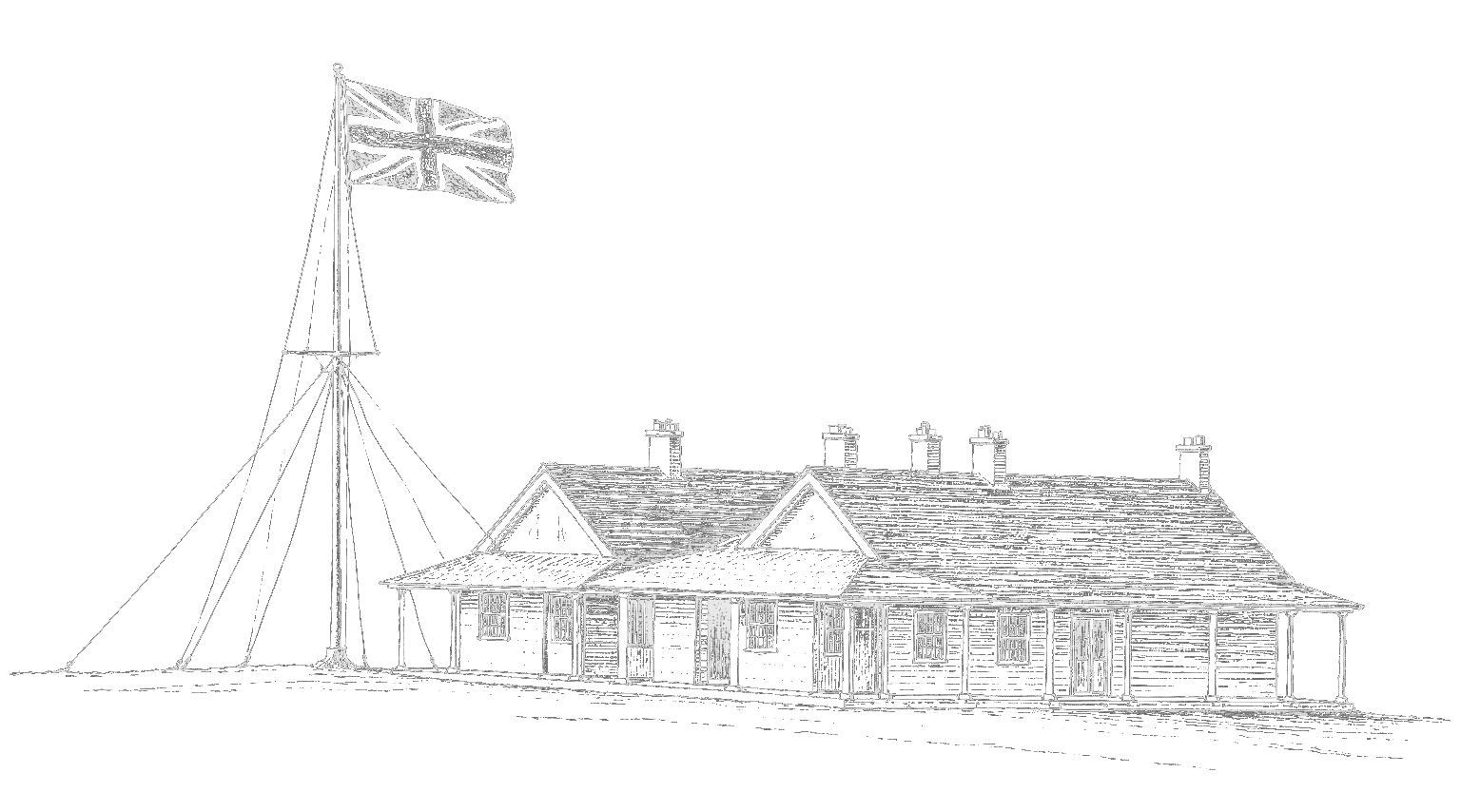
The Wellington (Colonial) Hospital was opened on the 15th day of September, 1847; it is a building of one story high, and comprises on the ground floor a good Surgery, one Ward capable of holding four patients, or in case of emergency, six, a large Store Room, one smaller and a Water Closet. Behind the Hospital there is a temporary wooden Kitchen and Servants’ Room. At the top of the first flight of stairs there is a Steam Bath Room, with Shower Bath and a room adjoining in which the patients sweat after being in the steam. On the upper story there is a large Ward capable of containing eight patients, but in case of emergency it will hold ten; there is in addition a small Ward for two people, a small Store Room leading to a large Cistern and a Water Closet. This building is of brick plastered with Roman cement outside, the plan being made for the addition of two large wings, which at a future time will properly speaking constitute the Hospital, the present part being then used (as intended) principally as offices and nurses’ apartments.
The greater number of the cases at first taken in were those of disease in its most aggravated and chronic form, and consequently required a long time, with great care and attention, to produce any effect on them. I have now great satisfaction in stating that many of those cases at first admitted, more for the purpose of alleviation than cure, have, under a proper and regulated system of treatment, which alone could be adopted and carried out in an Hospital, so far recovered as to astonish me and produce grateful feelings in the minds of the sufferers. I have also now no hesitation in stating that from the short time I have been acting in medical charge I have had sufficient data to enable me to say that incalculable good will arise by making this establishment a mixed Hospital.
When patients are first admitted into the Hospital they are, if strong enough, put into the Vapour Bath; on first admission, and the skin well cleansed with soap and water; if they are not able to bear the Vapour Bath they have a warm one instead. They have then their hair cut and are placed in a comfortable bed with clean sheets; at the head of each bed there is a card giving the name, age, place of residence, tribe of country, disease, and date of admission.
Next Page →
 New Munster Gazette 1848, No 7
✨ LLM interpretation of page content
🏗️ Report on Military Roads Construction
🏗️ Infrastructure & Public WorksMilitary Roads, Construction, Labour, Ngatiawa, Ngatiraukawa, Ngatitoa
- A. Hamilton Russell (Captain), Author of the report
- A. Hamilton Russell, Captain 58th Regt., Superintendent Military Roads
🏥 Colonial Hospital Report
🏥 Health & Social Welfare21 January 1848
Colonial Hospital, Medical Treatment, Patient Care, Wellington
- Author not specified