
✨ District Engineer's Report
NELSON GOVERNMENT GAZETTE. 65
Lead; a distance of about five miles of open Pakihis divides the two. This formed, the road would be complete, in a direct line from Packer\'s Point to Charleston. The advantages of this route would be a shorter distance than the present road by the beach. Secondly, a good road independent of tides; and thirdly, the connection of the mining districts lying between Westport and Charleston with both towns. For the completion of this line I estimate £1250. The districts of Addison\'s, Shamrock, and Brown\'s Terrace, are not progressing very fast, and after all, the proposed connection would only provide a bridle-track, so that I do not place this proposition in a prominent place.
The extension of the Giles\' Terrace or Caledonian track, in a branch along the North Lead, would, I think, prove of great service, and if not just now absolutely required, it is so very probable that it may become so, that my estimates would be very incomplete without it. I estimate for the extension of a road under the North Lead Terraces, to the Waimangaroa, £400.
Total for Coast line, £3300.
IV. Branch Roads in Coal Diggings and Contingencies.—To meet unforeseen contingencies, which might might occur on the discovery of new diggings, I propose the sum of £2000.
V. Street and Local Improvements.—Westport.—The back streets in the township of Westport are for the most part swampy and boggy, and a great deal of unwholesome ground and stagnant water exists, even in streets on which are numerous buildings. It has constantly been the habit of the Government to assist the inhabitants of this extent of one-half the expense. I therefore propose £500 to meet equivalent subscriptions. The amount I consider a small one for the purpose but considerable assistance in the work might be derived from the employment of prison labor, particularly in ditching, and forming, and stumping the roadways.
Charleston streets might also be principally attended to by the inhabitants of the Gaol, but to meet expenses of carting metal, &c., as occasionally required, I estimate £200.
Cobden.—For draining and repairing Bright and Robinson-streets, and part of Stafford-street, £150.
Fencing on Municipal Reserve, Westport.—Hitherto the residents in the Government houses on the Municipal reserve have been unable to make any use of the ground for gardens or any other purpose for the want of an enclosure, and this enclosure is further needed as a protection to the properties themselves, as the buildings are liable to damage from stray cattle, &c. There are about 36 chains of fence required, for which I estimate £150, including gates.
Total for street and local improvements, £1000.
VI. Harbor and Signal Stations.—Westport.—In the port of the Buller, there is a great deal requiring consideration. The protection of the river banks is no doubt the first question, but that being in the hands of the Provincial Engineer, I will say nothing of it here.
The harbor is, however, in my opinion, still further threatened by the sea itself on the South Spit. This Spit is composed of sand and shingle, and is simply a bank, which encloses the tidal waters, called the Buller Lagoon. This lagoon comprises one of the chief portions of the harbor accommodation, which the West Coast of this Island can ill afford to spare. In one part of this, the sea threathens to break through. It is difficult to calculate what events might ensue, if this were to take place. One consequence would, I think, follow inevitably, that the bar would become shallower as the river gained more outlet, and this alone would be a irreparable mischief to the port.
The breach of the sea into the lagoon would entirely sweep away the Spit altogether, and the refuge for shipping in times of doubt, and given haven for fitting and repairing vessels that now exists, would be gone for evermore. The means of preventing so great a disaster, I think are neither difficult nor expensive.
The action of sea waves upon a beach is altogether different from that of a flowing river on its banks, and to be differently treated according.
I should propose to form groins of strong posts, sunk deep in the sand or shingle, with birch or manuka sticks and brushwood wattled between them; these should run out from high water to low water marks at an inclination to the surge of the sea, to be determined on observations of the most prevalent winds, and currents in the sea. If properly planned, these would accumulate sand and shingle, both from the sea itself and the drift of sand before the wind, which is almost equally to be looked to as a resource as the other.
Such works are not costly, and may be quickly constructed; and their efficiency has been tested with known success on various parts of the English coast.
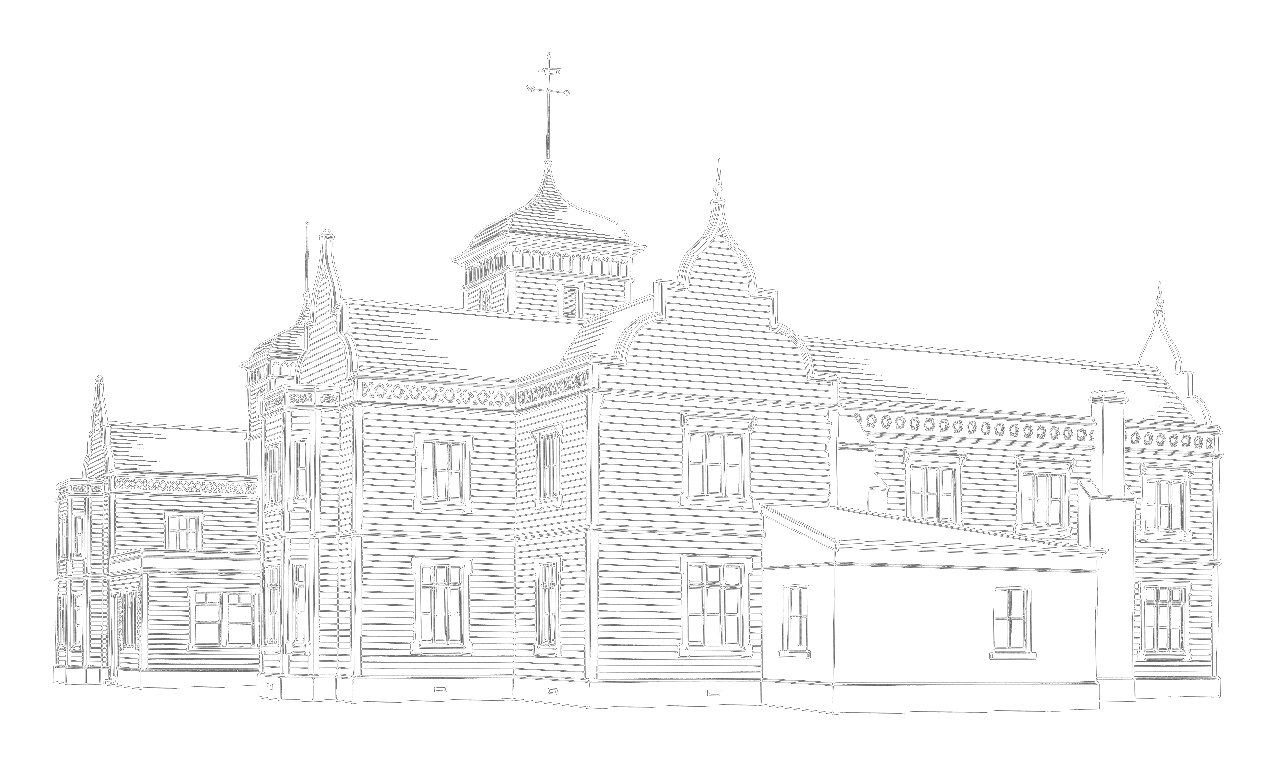
Some resistance will be found essential to the encroachment of the sea on the South Spit, and at a part of the North beach, nearly opposite the Roman Catholic Chapel.
I consider £600 would be ample for all needed in this respect. The advantages and accommodation of the port would be immensely increased by the deepening of the channel entering into the lagoon from the river. At low water there is a bar
laid dry which might be easily cut away, and by working at lowest spring tides a sufficient depth could be obtained to admit vessels drawing from 8 to 10 feet of water. This bar is entirely composed of shingle, and should be cleared, say 50 feet wide and 3 feet deep, and perhaps the length of two or three chains.
Two other channels in the lagoon require widening, and in some instances it might be found advisable to put up a groin of some description to retain the stream at flood and ebb in the deepened channel. This, however, I consider a small matter, and possibly not to be found necessary. For the deepening of the channels, &c., say £200.
A small jetty would be a very great advantage on the South Spit, for the purpose of unloading cargo and cattle from steamers, and hands are required by the launching of outward-bound vessels. There boat\'s crew) and repairs to the schooner, boats, &c., the supply of gear, and fitting an office in the old hospital building, now used as a store for tools, gear, &c., for the use of the Harbormaster, I put down £100.
Grey.—Removing snags from Cobden wharf, £100. I have, at a former time, reported to the Provincial Engineer upon the state of the Cobden wharf. £100 was £50 was spent upon it during the past year. A great part is now rapidly decaying, and it must become very costly to the maintenance. I do not, therefore, would suggest that expensive repairs being bestowed upon it, the whole structure not being worth it. For the purpose it seems very much less required than formerly. Vessels rarely come alongside as the principal coal depot is on the Greymouth Wharf. I would suggest that amongst the conditions stipulated upon the lease of the Brunner Mine in connection with the railway, it should be provided that the company reconstruct the Cobden wharf, the material to be entirely the stone from the adjacent hill side.
I do not anticipate that this wharf will be required to any great extent until a railway is formed to convey coal from the mine to the port, on the Cobden side of the river. To maintain it, however, for any purpose it will require at least £50 during the ensuing year.
Sundries for signal stations, gear, &c., at the Grey and Charleston, £50:
Total for harbors, &c., £1250.
Before closing the subject of harbor works, &c., I would venture to suggest a few remarks regarding the protection of the banks of the Buller River. I have read the report of the Provincial Engineer thereon, as well as those of Messrs. Woods and Balfour, on which I trust it will not be considered an impropriety in me to offer an opinion. On the means proposed as a remedy for the existing evils, I should be entirely in favor of the former.
Mr. Woods proposes an economical scheme as an experiment, the plan being to re-open the channel at the back of the Island abreast of Packer\'s Point. This appears to be a mistaken view.
First.—It is demonstrable that, if it is even possible to do it, the cost would be enormous. It is proposed to clear the old channel at the upper end of the island. The main current of the river impinges on the island below this point, wherefore it is obvious, that those things done by Mr. Blackett in the above, can have no effect on that current. To cause the stream to turn off into this old channel, it would be necessary to turn it off the river bank at a much higher point, which would cost as much as the work proposed by Mr. Blackett in another place. The difference being that Mr. Blackett\'s work would complete the purpose in view, while Mr. Woods\' would be but one experiment and stop towards it.
Secondly, admitting the possibility of turning the river, or a large part of it, as proposed behind the island, it appears to me a remedy of so dangerous a nature, that it should receive the gravest consideration. I feel myself convinced it would result in the destruction of the South Spit to the irreparable damage of the port. I think, however, it is unnecessary to warn the Government against this course, as I am sure the proposed amount of £2000 is utterly insufficient to accomplish it.
The true principle appears to be, to turn the stream off the injured part of the North bank by the least possible deflexion of the current of the river, and that can only be attained by works on that side of the river, and about the spot indicated by the Provincial Engineer. For further investigation of the resources at hand, no doubt some modification in the details of the work will be found necessary, but such modification will not, I think, diminish the expense as estimated at £12,000.
The kind of embankment proposed, is, I believe, the only one capable of standing in the Buller, where any breakwater has to resist a body of water from 35 to 40 feet deep at a high velocity, and having nothing but a loose shingle bottom to rest upon.
I have only one suggestion to make, in addition, to ask consideration of a question whether so large an expenditure as is
Next Page →
 Nelson Provincial Gazette 1869, No 21
✨ LLM interpretation of page content
🏗️
Continuation of District Engineer's Report on Nelson South-West Goldfields Public Works
(continued from previous page)
🏗️ Infrastructure & Public WorksPublic Works, Roads, Westport, Charleston, Cobden, Harbor improvements, Buller River, River protection, Mining
- Blackett (Mr.), Provincial Engineer referenced regarding river works
- Woods (Mr.), Proposed public works scheme for Buller River
- Balfour (Mr.), Author of report on Buller River protection