
Westland Provincial Gazette
Also known as
- The County of Westland Gazette
- The New Zealand Government Gazette, Province of Westland
Historical Background
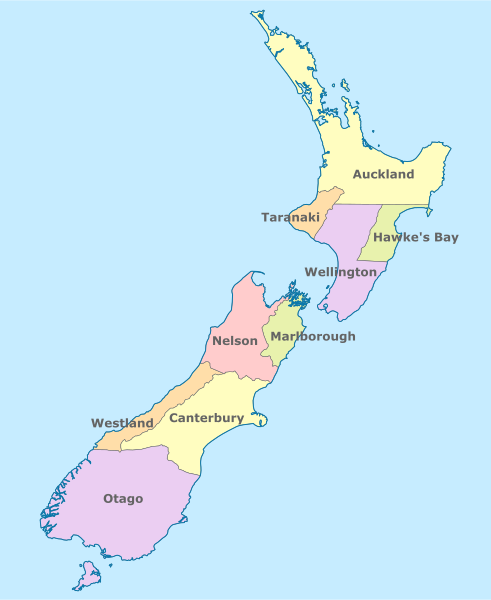
Westland was the last of New Zealand's ten provinces to be established, and one of the shortest-lived, existing as a full province for only three years before the abolition of provincial government in 1876. It was formed from the western portion of Canterbury Province, with its capital at Hokitika.
The area had originally been part of New Munster under the 1846 constitutional arrangement, passing to Canterbury Province when the six original provinces were established in 1853. At that time the West Coast was largely unknown to Europeans, with the Southern Alps forming a significant barrier between the two coasts.
The discovery of gold near the Taramakau River in 1864 transformed the region rapidly. Over the following years an estimated 30,000 people moved to the West Coast and Hokitika became the busiest port in New Zealand. In response to this growth, the central government separated the region from Canterbury in 1868 - not as a full province but as the County of Westland, an experiment in local government in which administrative powers were devolved but legislative powers remained with Parliament in Wellington. The arrangement proved unsatisfactory, and in 1873 the county was elevated to full provincial status under the Province of Westland Act.
As the gold rush subsided, the province's revenue declined sharply. Westland Province, along with the other surviving provinces, was abolished under the Abolition of Provinces Act, which took full effect on 1 November 1876.
Map of provincial boundaries, 1873
Further reading
https://en.wikipedia.org/wiki/Westland_Province
https://en.wikipedia.org/wiki/Provinces_of_New_Zealand
https://teara.govt.nz/en/colonial-and-provincial-government/page-2
Westland Provincial Gazette Statistics
8
Years Covered
250
Issues Processed
1,305
Pages Transcribed
5,899
Names Identified
3,416
Unique Names
2,974
Named Officials
402
Unique Officials
