
✨ Lunatic Asylum Report Continuation
Auckland Provincial Government Gazette. 51
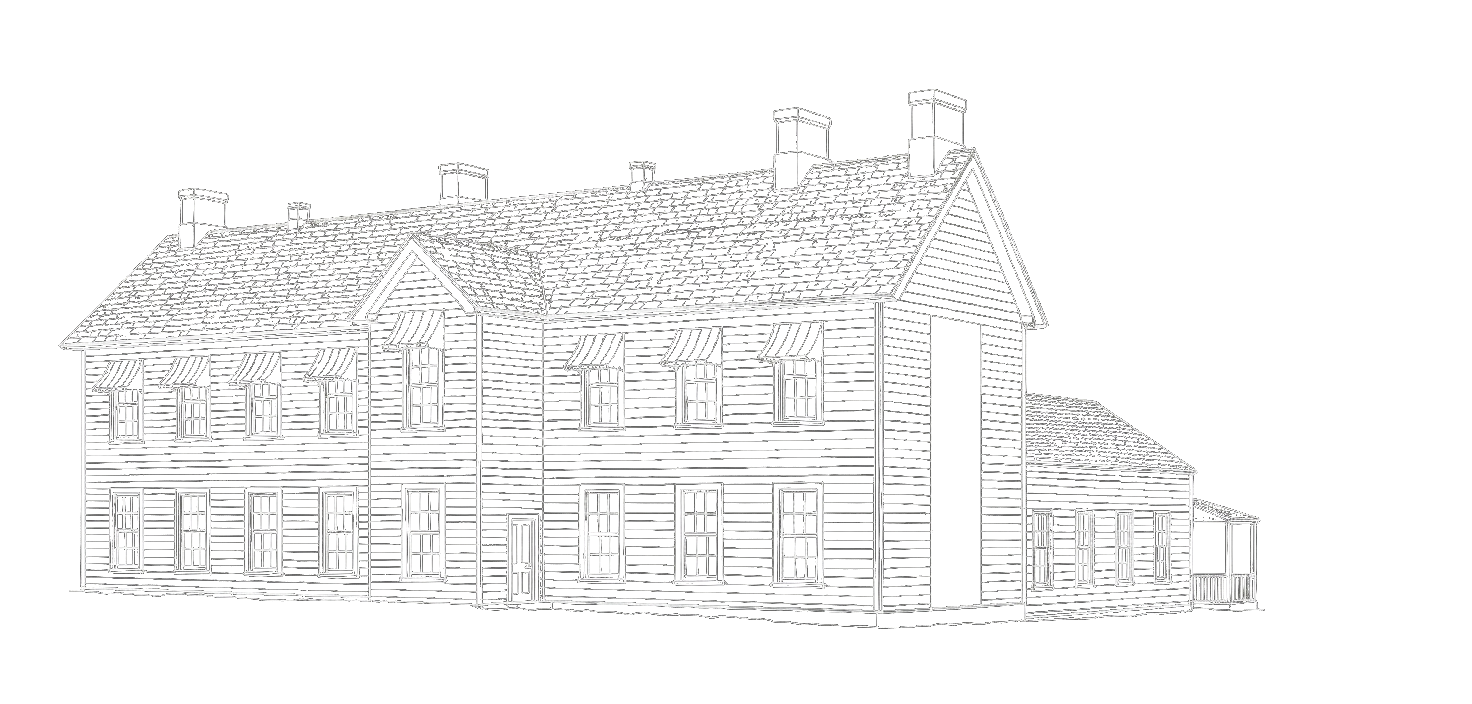
INTERIOR OF THE BUILDING.
The communication between the corridors and the several dormitories is occasionally delayed by the great variety of locks and keys, each attendant having the keys of their respective wards; one key should open every lock in the male and female departments respectively, thus, in the temporary absence of an attendant, unnecessary delay and possible danger would be obviated.
VENTILATION.
The ventilation is secured by ventilators the size of the panes of glass in the cast-iron windows. These turn upon pivots, several of which from time to time became eaten with rust and broke away, allowing the ventilator to fall out. This has been obviated by another contrivance, and on the whole the ventilation is satisfactory.
GARDEN AND GROUNDS.
The cultivation of the garden has proceeded very satisfactorily, and an abundant supply of good vegetables has been thereby obtained for the daily use of the inmates, to which their general good health may in some measure be attributable. Potatoes for seven months were thus obtained, and a much larger supply may be expected during the current year, from three acres planted in one of the paddocks. The grass sown in the paddocks some six or seven years ago seems to have worn out, and been replaced by dandelion and other weeds, and it is needless to expect milk from even one cow upon such pasture; after reploughing and fresh sowing I have no doubt of its becoming capable of supporting two or even three milch cows, to the great advantage of the institution.
GENERAL MANAGEMENT OF THE INMATES.
The adoption of a routine system in general management is to a certain extent indispensable; there are no class of persons who so urgently require extreme punctuality at meal times, hours of rising, and returning to rest, &c., as lunatics; it is obvious, however, that the more perfect the classification as to previous states of rank in society, the more readily will the system work; it is otherwise, however, with persons belonging to a rank in society different from that with which they are compelled to associate in the wards of an Asylum. To such persons the rigid routine of Asylum life becomes exceedingly irksome whilst a shade of self-respect is left in them, hence restoration to mental health, even in cases yet hopeful, is scarcely to be expected under such circumstances. The reception of patients of this class into Government or Pauper Asylums, as special cases, has already been practised with very considerable success in English Asylums, and seems to be specially applicable to these colonies, in which licensed houses for their reception are not commonly met with. The Commissioners in Lunacy, in their report to the Lord Chancellor for the year 1869, state: “The great want at the present time we believe to be Hospitals in which the insane of the middle class, who, although poor, are not reduced to pauperism, may be received at small sums varying from five to ten or fifteen shillings per week, according to circumstances. So inadequate is the charitable aid afforded to this class by all the Hospitals at present erected, that the Pauper Asylum is the only resort for them, and daily increasing numbers are sent there as ordinary paupers. To such an extent is this practised in country Asylums as to be frequently a matter of complaint by the visitors—imposing a burden upon the rate-payers which they are not legally called upon to bear.” To the patients themselves also it is no less a hardship and injustice, and painful cases are constantly coming under our observation in which persons of education and social position—clergymen, barristers, medical men, and others who from reduced circumstances are unable to meet the lowest charge at which admission can be obtained into licensed houses, are as a last resource driven to associate with paupers.” The experience of Dr. Bayley, the Superintendent of the Northampton Lunatic Asylum, coincides so exactly with my own that I may be permitted to quote his words: “In my experience of thirteen years as Medical Officer in Lunatic Asylums, many very painful cases have come under my notice of well educated men and women, insane, but well able to appreciate the position in which they are placed, to understand and feel most acutely the degradation of having to associate with paupers in the wards of a country Asylum, because their relatives could not afford the sum required to place them under private care.” We have had in this Asylum several cases of a description similar to the foregoing; cases in which it was exceedingly painful to me as Medical Superintendent to place under lock and key certain patients in the company of either men or women, as the case might be, whose language, manners, and general conduct were calculated to excite the most painful feelings in any refined mind, still maintaining even a feeble perception of the degradation thus inflicted. Private wards adapted to the varying monetary capabilities of the patient or his relatives, should be attached to a charitable institution of this description. This would ensure to the patient that amount of respect and attention to many minor wants which could not possibly be bestowed in the mixed multitude of a Pauper Asylum. For this extra accommodation and attendance, the Government would, as a matter of right, be entitled to an equivalent, but it is almost certain that in any case the cost would be trifling, compared with that of keeping a patient under private care. The system of having private wards attached to public Asylums has received the approbation of some of the ablest and best philanthropists. In a previous report I have stated particulars of certain Asylums in which the payment for private patients went a considerable way towards defraying the expenses of the Institution. This statement, which was forwarded to the Honorable Dr. Buchanan, Chairman of a Select Committee of the Legislative Council, I have not at present by me, but without referring to it for particulars, I may state that it was based upon reliable statements furnished in reports of Asylums kindly forwarded to me by friends in the United Kingdom and elsewhere.
SPECIAL TREATMENT.
In a circular dispatch of January 1st, 1863, addressed to the Governors of Colonies, a portion of which, I am sorry to say, only remains by me. I find the following amongst the general suggestions in Part III, which I beg to quote, inasmuch as it gives full expression to the views I have myself for many years entertained. Section XLVIII.—“It is evident that the objects desired in the treatment of the diseased in curative Hospitals and Asylums, are that the greatest possible proportion of patients should be cured, and in the shortest possible time, to which must be added, in the case of Asylums, that the normal condition and rights of the insane should be infringed upon in as small a degree as may be consistent with efficient management. It is not justifiable to rest satisfied with a less number of cures than the disease reasonably admits of, or with a system that permits any unnecessary restraint.”
In the circular from which I have quoted the foregoing, the means to these most desirable ends are pointed out. It is needless to quote them, for most
Next Page →
 Auckland Provincial Gazette 1874, No 10
✨ LLM interpretation of page content
🏥
Seventh Annual Report of Auckland Provincial Lunatic Asylum
(continued from previous page)
🏥 Health & Social Welfare30 January 1874
Lunatic Asylum, Annual Report, Mental Health, Statistics, Auckland, Water Supply, Exercising Grounds, Closets, Ventilation, Garden, Grounds, Patient Management, Special Treatment
- Bayley (Doctor), Superintendent of Northampton Lunatic Asylum
- Buchanan (Honourable Doctor), Chairman of Select Committee of Legislative Council