
✨ Auckland Provincial Lunatic Asylum Report
Auckland Provincial Government Gazette.
50
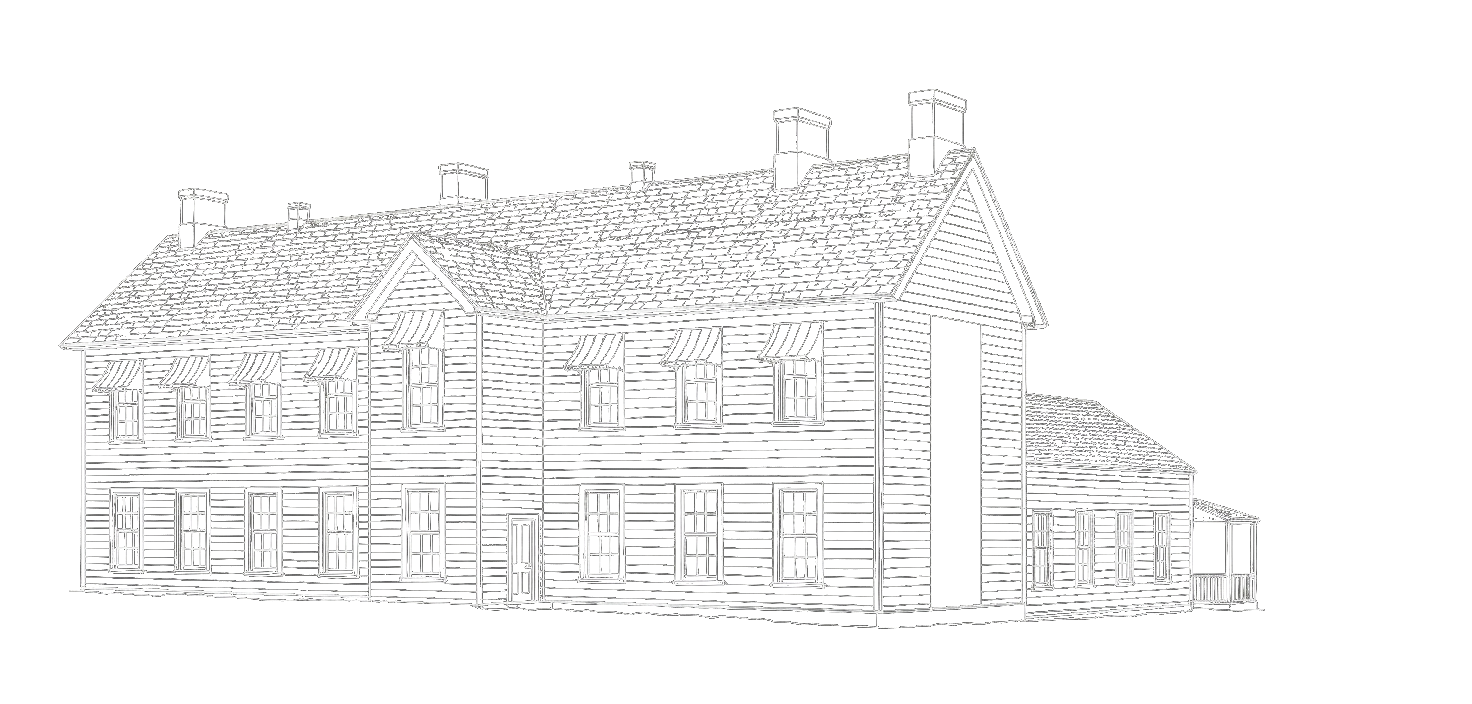
—are in themselves sufficient to prove that our people are certainly not more liable to insanity than the inhabitants of a country famed for the salubrity of its climate. But it may be of some advantage to compare our position as to liability to mental disease to that of other countries. The most correct information I have at my disposal at present is derived from the standard work of Drs. Bucknill and Tuke, in which I find as follows:—In the United States of America the number of insane was in 1860 estimated at one in seven hundred and thirty-eight; in France the number of lunatics and idiots has been estimated at one in seven hundred and ninety-five; in Norway the proportion has been reckoned at one in five hundred and fifty-one; in the Rhenish Provinces at one in six hundred and sixty-six. In England (not having the latest report, I quote the authors’ words)—“In these calculations, no account is taken of the number of insane persons not reported to the Lunacy and Poor Law Commission. We cannot doubt that were it fully known it would, when added to the number already ascertained, exhibit a proportion of at least one insane or idiotic person to every three hundred of the population.” The Report of the Scotch Lunacy Commission of 1861 makes a proportion of one in three hundred and forty-four, and it is most probable that the next statistical returns for this Colony will not show a greater proportion of insane to sane persons than any of those instances I have quoted. The number of cases, however, requiring asylum treatment will steadily increase with the increase of population, and increased accommodation must be provided for them. This Asylum is capable of accommodating one hundred inmates, without undue pressure. The right wing, which is occupied by both sexes, was originally intended for males only. The other wing, intended for females, according to the original plan, is still a great desideratum, and the evil effects of overcrowding are beginning to manifest themselves,—day-rooms, corridors, &c., being nightly occupied, owing to the impossibility of receiving any more into the wards. The want of a greater number of single wards, for dangerous or refractory cases, is experienced almost nightly. Under these circumstances, it is surprising that so few accidents occurred during the past year. The cubic measurement of the several associated and single dormitories have been furnished to the Commissioners during their visits of inspection last year; and it is to be hoped that the evident want of sleeping room for the present number of inmates, even without calculating on an augmentation of number, will have its due weight with the Government.
Water.
I have in previous reports dwelt so fully upon the absolute necessity of an ample supply of wholesome water for the efficient working of a large institution like this, that it may seem superfluous to dwell upon it now. The pressure, consequent upon a failure, has been much greater of late, owing to the increased number of inmates and the long-continuance of dry weather, and the bad quality of the supply yielded by the yard pump. The bathing and washing of one hundred and forty-two patients daily, not to speak of the quantity required for cooking, also washing out the rooms and corridors twice weekly, consumes a vast quantity. A perfect system of bathing, i.e., hot water supplied by piping from the large kitchen boiler, and a sufficient supply of cold from an ample reservoir, constructed to catch the vast quantity of rain which might be collected from the extensive roof of the building, is a great desideratum, as a most efficient curative agent in most forms of insanity. At present, water must be brought from a distance of half a mile, and conveyed in buckets to the upper story of the building, which taxes the powers of the attendants, and tends to limit the good results which might otherwise be obtained by hot and cold water conveyed by piping to the wash and bath rooms, to be used ad libitum, under the immediate control of the matron and senior attendant, in their respective departments. I cannot press this subject too strongly upon your Honor’s Government, because I am fully convinced that the want of a most ample supply of good water is seriously injurious to the efficient working of this Institution. In the meantime, we have struggled to meet the most urgent demands by carting water from an adjacent spring, which fortunately has never failed us during the longest drought, but this takes up a large portion of the attendants’ time.
Exercising Grounds.
It is well known that in most modern asylums the removal of everything calculated to give the impression of coercion, or prison discipline is effected as much as possible—hence, instead of high walls, surrounding limited court yards, sloping or undulating surfaces are selected, in order to permit the inmates to look over the protecting fences, and enjoy a view of the surrounding country, &c. Judicious arrangements of this character have contributed to remove the gloomy impressions likely to be fostered in the mind of the melancholic patient when confined in small court yards, surrounded with high brick or stone walls, within which the unfortunate patient necessarily believes that he is incarcerated for some capital crime, and often laments what he supposes to be his impending doom. Of this I have met with several instances. The exercising yards are attached to the building, each measuring a little over forty yards by twenty. The men’s yard is coated with scoria ash, which is reduced to a fine dust by the action of so many feet constantly pacing over it, and is blown about by the wind; hence, in dry, windy weather, the patients within an hour or so of their morning ablution become as filthy in appearance as if they had remained unwashed for weeks. The female yard is covered with grass; it is tolerable during dry weather, but becomes quite unavailable, as an exercising ground, during the rainy season. It would certainly be a great boon to those inmates who are necessarily confined in these yards if they were floored with asphalt: it would also render them much safer for epileptic cases, which are occasionally injured by falling on the scoria, before the attendants can succeed in preventing it.
The Closets.
I am sorry to be obliged to report very unfavorably of the original construction of the closets, which are merely deep excavations, apparently uninfluenced by the drainage pipes, which are said to flow into them. The male and female closets adjoin each other, and repeated efforts have been made by some of the inmates to remove the bricks from the partition wall, and thus effect a communication between them; in this they have on more than one occasion so nearly succeeded that it has been found requisite to place sheet iron plates over the brickwork to prevent such practices in future. The effluvium from these closets is at all times bad, though mitigated in some degree by the use of deodorisers—the most efficient of which has been fresh lime. The sewage to the rear of the building might be easily improved, without great expense, as the principal part of the work could be done by the inmates.
Next Page →
 Auckland Provincial Gazette 1874, No 10
✨ LLM interpretation of page content
🏥
Seventh Annual Report of Auckland Provincial Lunatic Asylum
(continued from previous page)
🏥 Health & Social Welfare30 January 1874
Lunatic Asylum, Annual Report, Mental Health, Statistics, Auckland, Water Supply, Exercising Grounds, Closets