
✨ Provincial Government Regulations and Legal Notice
342
AUCKLAND PROVINCIAL GOVERNMENT GAZETTE.
THE FOLLOWING REGULATIONS SHALL EXCLUSIVELY APPLY TO AND BE ENFORCED WITHIN THE LIMITS OF THE SAID OUTER AREA OF THE SAID CITY:
Materials, &c.
- It shall be lawful to erect, alter, add to, or renew the external walls of any building with iron or wood (but not the chimneys), subject to the requirements contained in section 50 of these regulations.
New Buildings.
- Any building hereafter erected on vacant ground not requiring the full frontage of such ground, must be erected in the centre thereof, that is to say:—If a building of 24 feet frontage be erected on an allotment having 33 feet frontage, then such building must be erected so as to leave a clear space of 4 feet 6 inches between the building and allotment on each side of the frontage.
Additions.
- Should any building hereafter erected constitute an addition to a building then already erected, such addition may be built with walls composed of wood or iron, provided such addition is erected immediately in rear of the original building, or at least so as to leave a space of 4 feet 6 inches between the building and allotments on either side thereof, or such addition may be made so as to increase the height of the original building.
Repairs.
- The external walls and party walls of any building already erected of wood or iron, may be repaired with the same materials of which they are composed.
Privies.
- And privy hereafter erected in the yard or area of any building, must have a door, and be properly screened from public view, and no cesspit must be sunk at a less distance than 2 feet from the land of any adjoining owner.
REGULATIONS OF FOOTPATH CROSSINGS.
CROSSINGS OF FOOTWAYS IN STREETS WHERE A STONE KERB IS NOW LAID OR HEREAFTER SHALL BE LAID:
The crossing shall be paved the whole width of the footpath commencing from the exterior of the side channel with a slope to run out at 4 feet or less in the wide streets, and 2 feet 6 inches or less in the narrow streets, from the outer edge of the kerb, from which line the paving shall follow the slope of the footpath and be level therewith until it meets the outer edge of the footpath, and the length of the crossing measured longitudinally with respect to the street, shall not be less than 7 feet nor more than 20 feet, except where the crossing is an entrance to a private street, when it must be the full width of such private street between the footpaths, the paving shall be laid in regular courses of a uniform width, each stone being not less than 8 inches square, nor more than 12 inches square on the surface, and not less than 9 inches deep, squared and laid upon a good and solid bed of gravel, broken metal or concrete, and properly rammed, the paving shall be enclosed on each side for the whole width of the footpath, and returned for its entire length by a properly axed kerb, uniform and corresponding with the kerb of the street, which kerb at its junction with the kerb of the street shall terminate continuously with it on each side in the segment of a circle turned or described from a radius of the length of one-third the breadth of the footpath.
The whole paving and kerb shall be composed of granite or bluestone, or such other durable stone as the City Surveyor for the time being shall approve.
The kerbing shall be neatly squared on the exposed portions, and be in lengths of not less than 1 foot 6 inches by 2 feet in depth, and finished at least 6 inches thick.
CROSSING OF FOOTWAYS IN STREETS WHERE A STONE KERB HAS NOT BEEN LAID.
The crossings may be formed in every respect the same as the crossings described in streets with kerb stones, with the exception that no kerbstone need be laid down. Provided, however, that so soon as a kerbstone is laid down in the usual line of street by the Corporation, the said crossing places shall forthwith be constructed in strict accordance with the regulation for such crossings. Provided nevertheless, that where the street is not formed to the intended level by the said Council, such crossings may be made of properly macadamised stone, and the crossing over the channel shall be such suitable bridge as shall leave a free passage for the water underneath the same.
Passed by the said Council this 13th day of November, One thousand eight hundred and seventy-one.
P. A. PHILLIPS,
(L. S.)
Mayor.
F. BRODIE,
Town Clerk.
VICTORIA,
by the Grace of God, of the United Kingdom of Great Britain and Ireland, Queen, Defender of the Faith, to WILLIAM MORRIN, of Auckland, in the County of Eden, Colony of New Zealand, Merchant,
GREETING:
WHEREAS an action is now pending in our Supreme Court of New Zealand, Northern District, Province of Auckland, between Matthew V. Hodge, of Wanganui, in the Province of Wellington, in New Zealand, Solicitor, Plaintiff, and John Kirkpatrick, of Auckland, in the County of Eden, in New Zealand, Sharebroker, Defendant, and, in order that the Plaintiff may proceed in the said action, we command you that you do retain and keep all and singular lands and other hereditaments, monies, and chattels, bills, bonds, and other property of whatsoever nature in your custody or under your control, at the time of the service of this Writ, belonging to the above-named Defendant or to or in which such Defendant shall at that time be legally or equitably entitled or otherwise beneficially interested, and whether solely or jointly with any other person or persons, and all debts of every kind then due by you to such Defendant, although the same or part thereof may be payable only at a future day.
Witness His Honor Sir George Alfred Arney, Knight, Chief Justice of our said Supreme Court of New Zealand, at Auckland, this thirteenth day of December, 1871.
(L.S.) — This Writ was sued out by Samuel Jackson, of Fort street, in the city of Auckland, solicitor for the plaintiff.
Next Page →
 Auckland Provincial Gazette 1871, No 41
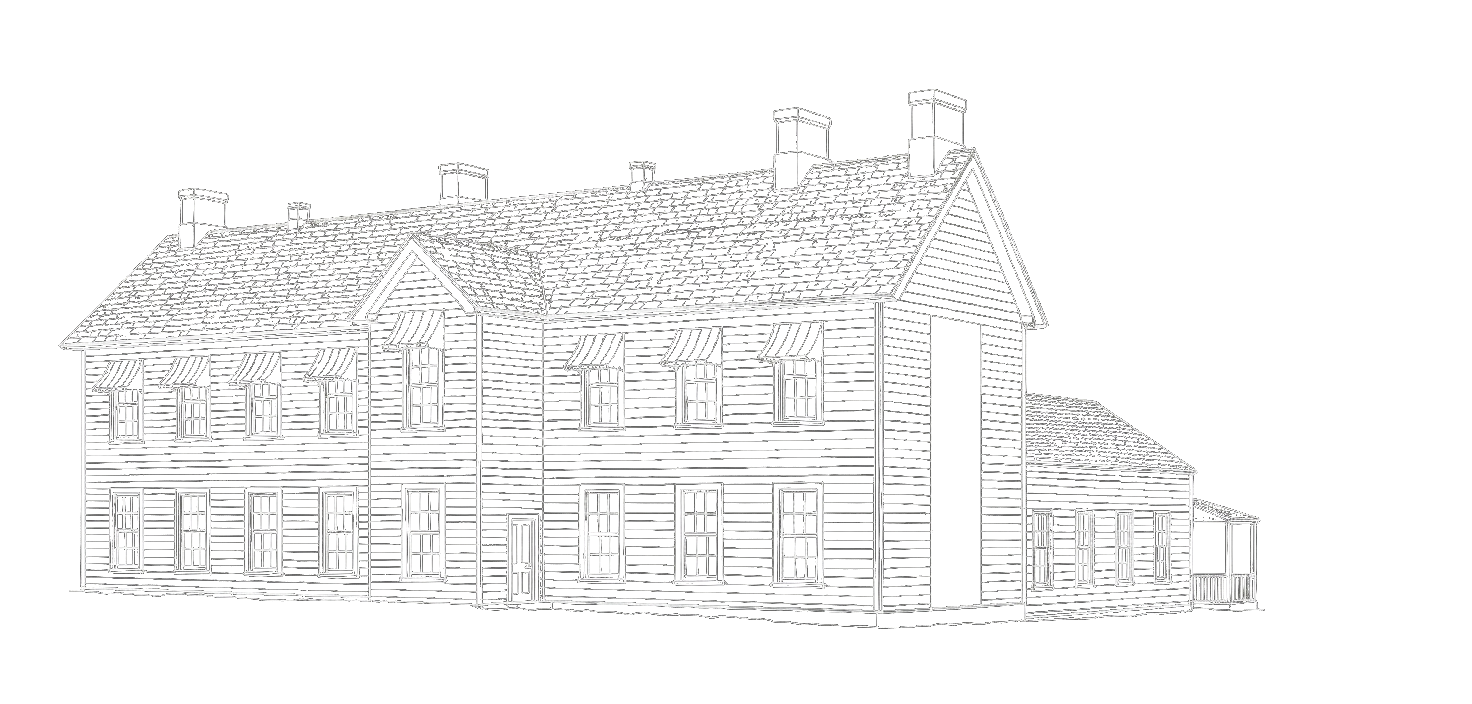
✨ LLM interpretation of page content
🏘️
Auckland City Building Regulations
(continued from previous page)
🏘️ Provincial & Local GovernmentBuilding Regulations, Auckland City, Materials, New Buildings, Additions, Repairs, Privies, Footpath Crossings
- P. A. Phillips, Mayor
- F. Brodie, Town Clerk
⚖️ Writ of Retention in Legal Action
⚖️ Justice & Law Enforcement13 December 1871
Legal Action, Supreme Court, Writ of Retention, Auckland, Sharebroker, Solicitor
- William Morrin, Subject of Writ of Retention
- Matthew V. Hodge, Plaintiff in Legal Action
- John Kirkpatrick, Defendant in Legal Action
- His Honor Sir George Alfred Arney, Knight, Chief Justice
- Samuel Jackson, Solicitor for the Plaintiff