
✨ School Inspection Report
166
considering the age of the boys (from 16 to 18). In algebra they were most of them able to answer questions in multiplication and division, and one was able to work out a simple equation. These attainments, though not high, are very much better than their attainments in classics.
Below the sixth form no mathematics are studied beyond arithmetic.
The number of boys in the College is 67, divided into seven classes, under three masters, besides a mathematical and a French master. The age of the boys varies from 16 to 9, and one is aged 18. Attendance on the whole regular.
G. S. SALE,
Inspector of Schools.
November 30, 1864.
THE COLLEGE GRAMMAR SCHOOL.
The arithmetic is probably fairly proportioned to the time allowed for it; the principles are well explained and the subject taught rationally rather than mechanically; but the average of skill and precision seems less than might fairly be expected from the advanced age of the pupils and the number of years they have been in the school. The methods of working fractions and discount might be improved. I observe that the boys, Lewis from the Edinburgh High School, Thomson and Bundle from Papanui, Griffin from Nelson, and Dudley taught at home, have a more clear and concise way of working a question in fractions than those whose instruction has been more exclusively confined to the Grammar School for from 3 to 6, 7, even 10 years. The work of these latter, on a much more cumbrous method, was, however, very creditable both for the pains taken and the generally correct result.
A question on Present Value (being really and accurately a question of “True Discount,”) was worked by “Simple Interest” by all who tried it. They do not seem to have been accustomed to the more accurate method.
The Fourth Form, composed of comparatively new boys, excels the higher forms in arithmetic.
It is due to the school to mention that it is the only one able, so far, to answer correctly the questions “Which is heavier, and by how much?
1.—1 lb. of gold or 1 lb. of feathers?
2.—1 oz. of gold or 1 oz. of feathers?
The spelling is very defective, and remarkably so in the higher forms.
The following words were given as a test of spelling to the third, fourth, and fifth forms:—
Sovereign
Assuage
Parliament
Abscess
Exaggerate
Benefited
Mischievous
Supersede
Ascent
Colonel
Recommend
Crystal
The sixth form, as presented at the inspection, was made up of twelve boys of the average age of 14½ years, who have severally been from one to ten years, or on an average 4¼ years in the school.
The boy, aged 16, who had been ten years in the school made no mistake in spelling. The rest made from one to six mistakes, or on an average upwards of three mistakes each.
The fifth form nearly four mistakes each.
The fourth form upwards of five mistakes each.
Geography and English History:
The classes examined showed a good general knowledge of ‘mathematical,’ ‘physical,’ and ‘political,’ geography; the form, motions, dimensions, distances, &c., causes of difference of temperature; and the countries and general topography of the globe.
In English History a fair general knowledge.
The discipline of the school is so far good as that the boys are accustomed to attention and order. There was scarcely an instance of slovenliness of dress or manner.
The punctual observance of hours seemed questionable. The afternoon bell was not rung till seven and a-half minutes after two, p.m.
The home lessons are somewhat long, and are not, in the lower forms, quite adapted to the age and ability of the younger boys; to those who have not had a preliminary course of instruction in English Composition, an essay or theme on an abstract quality must be too difficult an exercise for them fairly to do.
Next Page →
 Canterbury Provincial Gazette 1865, No 22
✨ LLM interpretation of page content
🎓
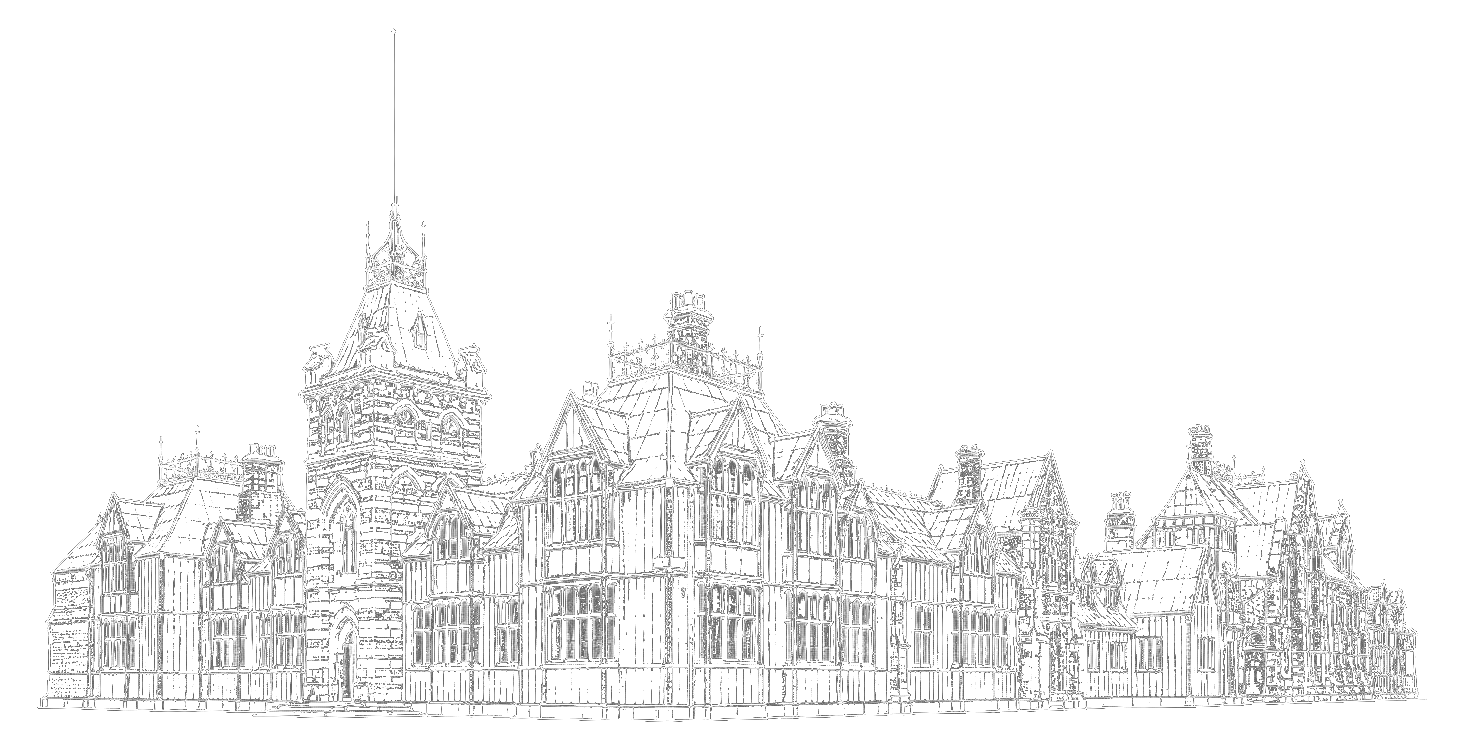
Inspection Report of Christ’s College Grammar School
(continued from previous page)
🎓 Education, Culture & Science30 November 1864
School Inspections, Grammar School, Canterbury
- Lewis, Student mentioned in arithmetic performance
- Thomson, Student mentioned in arithmetic performance
- Bundle, Student mentioned in arithmetic performance
- Griffin, Student mentioned in arithmetic performance
- Dudley, Student mentioned in arithmetic performance
- G. S. Sale, Inspector of Schools